Chocolate for Retail


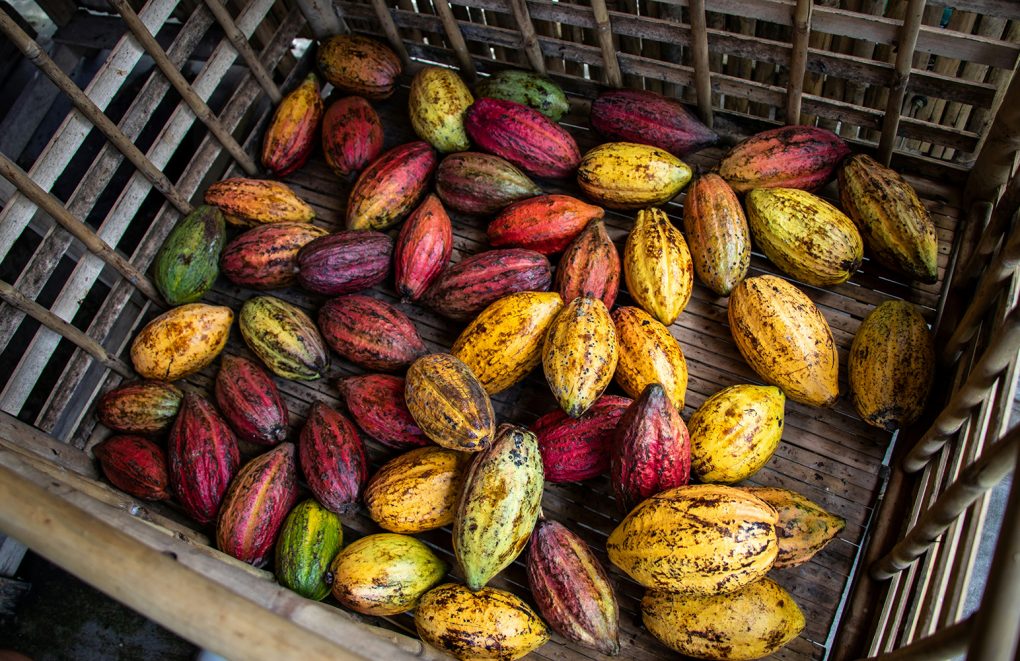
Beyond Forastero, Trinitario and Criollo – why Peru is at the heart of rethinking cacao diversity.
For most of chocolate’s modern history, the conversation began and ended with three names: Forastero, Trinitario and Criollo. It was a tidy taxonomy – the kind that fits neatly on the back of a chocolate wrapper – but it was never the full story. And in no country is that clearer than Peru.

Look at the map above. Each coloured dot represents a distinct genetic group of cacao identified growing across Peru’s wildly varied landscape: from the Amazon basin to the Pacific coastal valleys, from Andean foothills to the deep lowland forests of Madre de Dios. Named varieties like Chuncho, Nanay, Iquitos, Contamana, Scavina, Purus Peru, Tikuna, Gran Blanco de Piura and many others are not footnotes to the Forastero story – they are stories of their own, each with its own flavour personality and its own genetic lineage, stretching back centuries.
The old three-category model made a kind of commercial sense in an era when chocolate was primarily an industrial commodity. But as researchers like those at Bioversity International and Peru’s own INIA have mapped the country’s cacao genetics with increasing precision, it has become clear that we were like someone who had visited a vast library and only described three books. The diversity was always there – we just hadn’t looked closely enough.
A Country Unlike Any Other
Peru’s cacao diversity is no accident. The country is one of the world’s great centres of biological diversity in general – home to 84 of the 117 recognised life zones on Earth. Its cacao reflects this. The Amazon basin alone contains many wild cacao populations whose genetics have never been cultivated commercially. The coastal valleys of Piura in the north produce the extraordinary Gran Blanco cacao, its pods a ghostly pale green, its flavour notes closer to flowers and nuts than anything most people associate with chocolate. The highland-adjacent valleys of Cusco are where the Chuncho variety grows – one of the most celebrated genetics in fine chocolate today, producing bars of exceptional elegance and aromatic complexity.
This diversity is actively threatened. Commercial pressures push farmers towards high-yielding hybrid varieties that are disease-resistant but usually flavour-poor. Every time a smallholder replaces a native Chuncho or Nanay tree with a CCN-51 hybrid, a flavour – and a piece of botanical history – is lost. Which is why the work being done by the researchers, institutions and farmers behind that map matters so much, and why the craft chocolate makers who seek out these genetics are doing something more than just making excellent bars.
The map identifies over a dozen distinct genetic groupings. A small selection of what makes Peru’s cacao world so remarkable: Chuncho, Gran Blanco de Piura, Nanay, Iquitos, Contamana, Scavina, Purus Peru, Tikuna, Madre de Dios, Cajamarca-Amazonas, Loreto, Huallaga, Satipo-VRAE.

Chuncho deserves particular attention. A native variety of the Cusco and Quellouno valleys, it is one of the oldest known cultivated cacaos in Peru – grown by Andean communities long before Spanish colonisation. Its flavour is distinctive: often featuring red fruits, aromatic florals, and subtle herbaceous notes. In a blind tasting, you would not guess you were eating chocolate in any conventional sense. It is something entirely rare and unique.
Gran Blanco de Piura is just as singular. Unlike virtually every other variety, it grows not in jungle but in desert – the arid Piura Valley of northern Peru, where it has adapted to survive on a fraction of the water that Amazon cacao requires. Fewer insect predators mean less need for tannins as a defence mechanism, and the flavour reflects this: bright citrus, passion fruit and toffee, with an acidity that feels closer to tropical fruit than to conventional dark chocolate. Vanishingly rare, it represents only a tiny fraction of Peru’s total cacao harvest.
The Makers Who Listen
Understanding cacao genetics only becomes meaningful on the palate. Two makers we work with at The High Five Company have made it their mission to translate Peru’s genetic richness into incredible bars that are an unforgettable experience.
QANTU CHOCOLAT – Montréal, Canada
Founded by Elfi and Maxime – a Peruvian-French couple who met in Cusco – Qantu was born from a deep personal connection to Peru’s cacao. Their philosophy is straightforward: work exclusively with native varieties, resist the economic temptation of commercial hybrids, and let the genetics speak. Bars are named by region and variety – Chuncho, Gran Blanco, Bagua – because to Qantu, those names mean something special. Qantu arrived on the scene in 2017 and immediately won two Academy of Chocolate Awards. Years later, they remain one of the most important voices in Peruvian fine chocolate.

VIGDIS ROSENKILDE – Norway
Norwegian maker Vigdis Rosenkilde brings a meticulous, research-driven approach to Peruvian cacao. Rather than imposing a signature character, she lets each origin and variety set the terms – her range spans different percentages and regions, each bar a considered portrait of a specific genetics and place. The Chuncho from Quellouno is a particular highlight: it changes as it melts, revealing layers that reward slow, attentive eating. For anyone wanting to understand what Peru’s native varieties are genuinely capable of, her bars are essential.
What unites both these makers is an attitude to cacao that is more like viticulture than confectionery. They talk about growing regions, about the specific valleys and altitudes where their beans were grown, about the fermentation conditions that year. They visit farms. They build long relationships. What ends up in the wrapper is inseparable from where – and how – it was grown.
The Research Keeps Evolving
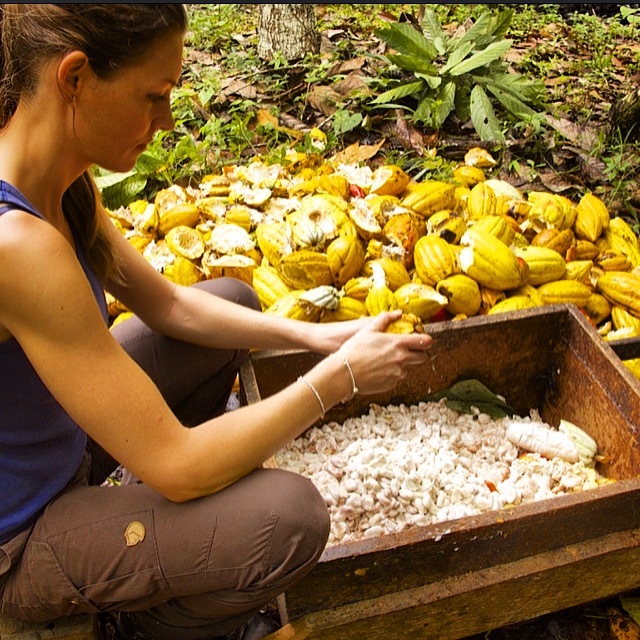
One of the genuinely exciting things about fine cacao right now is that our understanding of it is not settled. The map above represents the current state of genetic research in Peru – but it is a snapshot, not a final word. Research programmes around the world continue to identify new genetic populations, refine existing classifications, and uncover relationships between varieties that were previously unknown.
The old Forastero/Trinitario/Criollo framework was based on observable physical characteristics – pod shape, colour, cotyledon colour. Modern genetic sequencing has revealed that this picture was always incomplete. “Criollo” in particular turns out to be a far more diverse category than anyone suspected, encompassing genetically distinct populations that share an appearance but diverge sharply in flavour potential. Chuncho, for instance, sits outside the conventional classification entirely – it is neither Forastero nor Criollo in any meaningful genetic sense. It is simply Chuncho.
This is why bars labelled by variety name – rather than just percentage – matter. When you buy a Chuncho 70% rather than a generic “Peru 70%”, you are buying a specific genetic identity, a specific flavour personality, a specific place in the landscape. The percentage tells you how much cacao is in the bar. The variety name tells you which cacao – and that is a far more interesting question.
Five Peru Bars Worth Tasting Now
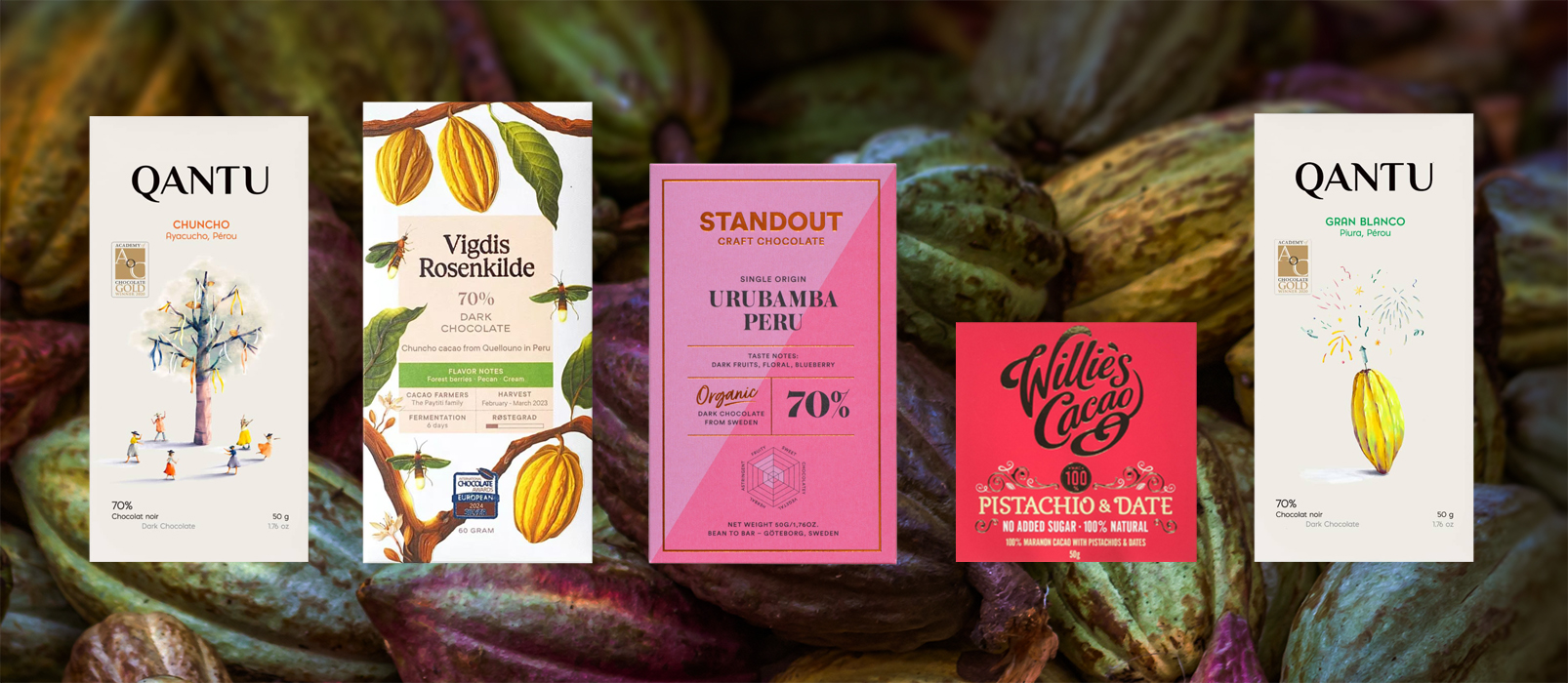
The benchmark Chuncho bar – delicate florals, nutty creaminess, and that unmistakable aromatic length. A masterclass in single-variety chocolate from the Cusco valley.
Precise, layered, and deeply thoughtful, with notes of forest berries, pecan nuts and cream. The same genetics as above, but a different maker’s hand reveals a different facet of the variety.
From the Sacred Urubamba Valley, this bar offers another vibrant expression of Chuncho cacao – tasting notes of dark fruits, floral, and blueberry. Mouthwateringly good!
100% cacao made approachable by pairing with pistachio and date. To preserve the precious flavour notes this rare bean from the remote Marañon canyon in Peru, it is conched for a huge 21 days.
Piura’s ghostly pale cacao in its finest form, with creamy honey and citrus notes. A multi-award winning bar, for good reason!
Check our full range of Peruvian origin chocolate and place your wholesale orders today!


 Pure and Honest
 Ethical and Delicious